

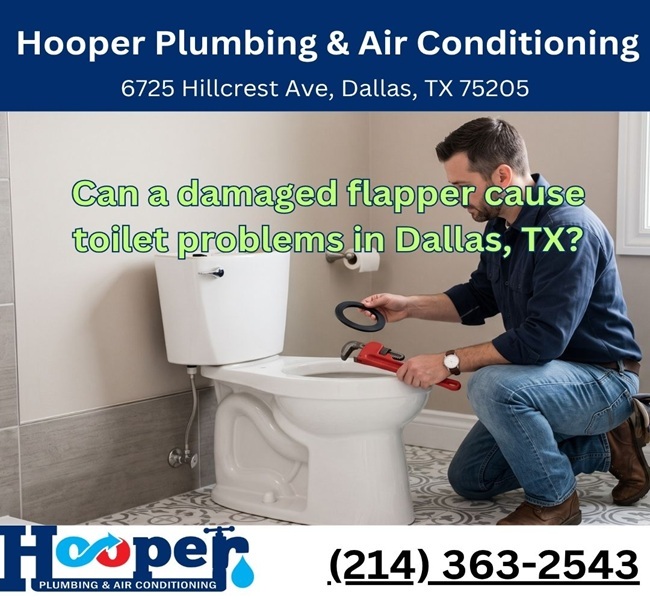
Yes, a damaged flapper can absolutely cause a range of toilet problems, and it is one of the most common reasons behind a toilet that runs, wastes water, or flushes weakly. The flapper is a small rubber part, yet when it fails it affects how the entire toilet performs. For homeowners, property managers, and landlords across Dallas, this matters because a worn flapper often goes unnoticed until the water bill climbs or the sound of a constantly running tank becomes impossible to ignore. Understanding what this part does, why it wears out faster in our region, and how to spot the early warning signs can save water, protect your fixtures, and help you decide when a simple check will do and when it is time to call a professional plumber.

The Short Answer for Dallas Homeowners
In most cases, yes. A damaged or worn flapper is one of the leading reasons a toilet develops problems in Dallas homes. The flapper controls the release of water from the tank into the bowl during each flush, and it also creates the seal that stops water from leaking through once the flush is complete. When that seal breaks down, water escapes silently, the fill valve keeps topping off the tank, and the toilet never truly rests. The result can be anything from a faint trickle to a toilet that runs around the clock. Because the part is inexpensive and easy to overlook, many property owners spend months paying for wasted water before they trace the problem back to its source. In many cases, prompt Toilet Repair resolves the issue quickly.
What a Toilet Flapper Does
To understand why a damaged flapper causes so much trouble, it helps to know the job it performs on every flush. The flapper is the flexible rubber or silicone piece that sits at the bottom of the toilet tank, directly over the flush valve opening. It is small, but it is responsible for one of the most important functions in the entire fixture.
How the Flapper Seals Each Flush
When you press the handle, a chain lifts the flapper and allows the water stored in the tank to rush down into the bowl. Once the tank empties, the flapper drops back into place and forms a watertight seal against the valve seat. The tank then refills and waits for the next flush. This cycle depends entirely on the flapper sitting flat and sealing cleanly. If the rubber warps, hardens, or collects debris along its edge, that seal fails, and water begins to seep past it into the bowl.
Why Dallas Hard Water Wears Flappers Faster
Dallas and the surrounding communities are known for hard water, meaning water with a high concentration of dissolved minerals such as calcium and magnesium. Over time, these minerals leave chalky deposits on plumbing components, and the flapper is no exception. Mineral buildup along the sealing edge prevents the flapper from closing tightly, while constant exposure to treated water can cause the rubber to stiffen and crack sooner than it would in areas with softer water. This is a big reason local homeowners often replace flappers more frequently than the average lifespan you might read on a package.
Toilet Problems a Damaged Flapper Can Cause
A failing flapper rarely announces itself. Instead, it tends to create a handful of recognizable symptoms that grow more noticeable over time. Here are the issues property owners in Dallas report most often.
Constant Running and Phantom Flushing
The most common sign of a bad flapper is a toilet that runs continuously or cycles on its own. Because the seal is not holding, water slowly drains from the tank into the bowl. When the water level drops far enough, the fill valve activates to refill the tank, creating that sudden burst of noise plumbers call a phantom flush. You may hear it in the middle of the night or notice the toilet hissing quietly between uses. Both point to water escaping where it should be held. When the source is hard to pinpoint, professional Water Leak Detection can locate it.
Weak Flushes and Wasted Water
A flapper that closes too early can cut a flush short, releasing only part of the water the bowl needs to clear waste effectively. This leads to weak or incomplete flushes and, in some cases, repeated flushing that wastes even more water. On the other end, a flapper that fails to seal wastes water continuously, sometimes hundreds of gallons in a single day without anyone realizing it. For landlords and property managers overseeing multiple units, a few neglected flappers can quietly inflate water usage across an entire property. Timely Plumbing Repair helps keep that waste in check.
Symptom and Likely Flapper Cause
| Toilet Symptom | Likely Flapper Cause |
|---|---|
| Toilet runs constantly | Worn or warped seal that fails to close |
| Phantom flushing at random times | A slow leak draining the tank over time |
| Weak or partial flushes | Flapper closing before the tank empties |
| Higher water usage | Mineral buildup preventing a full seal |
Why Flappers Fail Faster in Dallas and Mesquite
Mineral Scaling and Rubber Breakdown
The combination of hard water and the local climate places extra stress on toilet flappers throughout the Dallas and Mesquite area. Mineral scaling is the primary offender. As calcium and magnesium deposits gather on the flapper and the valve seat, they create a rough surface that the rubber can no longer seal against. At the same time, the natural aging of rubber is accelerated by mineral exposure, leaving the flapper brittle and prone to cracking. Homeowners who notice their flappers failing every couple of years rather than lasting much longer are usually dealing with the effects of our regional water quality rather than a defective part. Keeping this in mind helps property owners plan for maintenance instead of being caught off guard.
What Property Owners Can Do Next
Simple Checks Before Calling a Professional
Before reaching for the phone, there are a few quick things you can inspect on your own. These checks are safe, require no special tools, and can help you confirm whether the flapper is the source of the trouble.
- Add a few drops of food coloring to the tank, wait about fifteen minutes without flushing, and check whether the color appears in the bowl. If it does, the flapper is leaking.
- Lift the tank lid and look at the flapper for visible warping, cracks, or a chalky mineral film along its edge.
- Gently press the flapper down while the tank is full to see if the running water stops, which points to a seal that is not seating properly.
- Check that the lift chain has a small amount of slack, since a chain that is too tight can hold the flapper open.
- Listen for hissing or trickling sounds during periods when the toilet is not in use.
When to Bring In a Licensed Plumber
If a new flapper does not solve the problem, or if you notice recurring leaks, unusual sounds, or water pooling around the base of the toilet, it is wise to bring in a professional. Persistent issues can signal a worn valve seat, a failing fill valve, or a problem further down the line that a simple part swap will not fix. An experienced plumber can diagnose the true cause, address any hard water damage, and make sure the entire flushing system works the way it should. This is especially valuable for property managers and landlords who need reliable fixtures across many units and cannot afford recurring water waste. For sudden failures or flooding, an Emergency Plumber can respond right away.

Final Thoughts for Dallas Property Owners
So, can a damaged flapper cause toilet trouble in Dallas homes? The answer is a clear yes. This small rubber part plays a large role in how efficiently your toilet operates, and when it wears out, the effects range from constant running and phantom flushing to weak flushes and significant water waste. Because the hard water common throughout Dallas and Mesquite tends to shorten a flapper’s lifespan, staying alert to the early warning signs is one of the simplest ways to protect your home and your water bill. A quick inspection can often confirm the problem, and a timely replacement can restore your toilet to full performance. When the issue runs deeper or keeps coming back, the team at Hooper Plumbing is ready to help. To learn more or schedule service in the Dallas area, explore the Hooper Plumbing Dallas service page at hooperplumbing.com/dallas/ and let an experienced professional take care of the rest.