

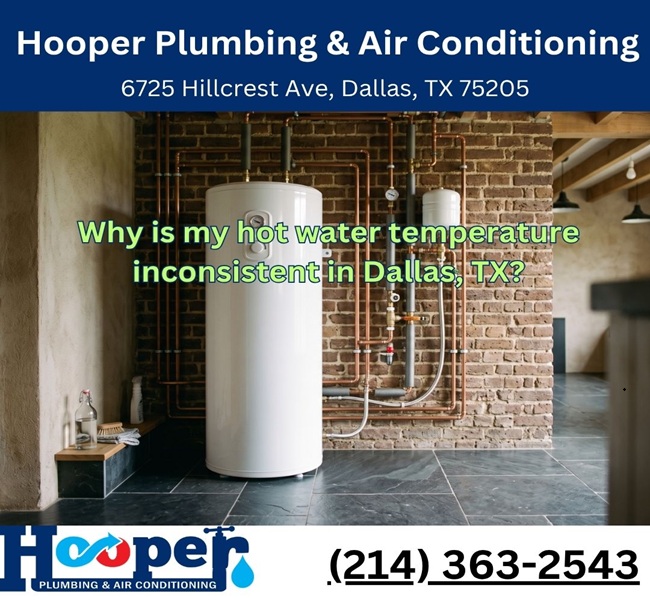
Inconsistent hot water in a Dallas home usually points to a water heater that is struggling to hold a steady temperature, and the most common reasons are sediment buildup, a failing thermostat or heating element, or a tankless unit reacting to changing water flow. If your shower runs warm, then cold, then hot again, you are not imagining it, and you are not alone. Homeowners across Dallas deal with this every day, and the swings tend to get worse as a water heater ages or as mineral rich local water takes its toll. Understanding why the temperature moves around helps you describe the problem clearly, know whether the fix is simple or serious, and decide when it is time to bring in a licensed plumber. This guide walks through the signs, the causes, and the path back to steady hot water.
The Telltale Signs of Inconsistent Hot Water
Before you can fix inconsistent hot water, it helps to recognize exactly how the problem shows up. The pattern you notice at the tap often points straight to the cause.
Sudden Swings From Hot to Cold
The classic complaint is water that will not settle. You set the handle, step in, and the temperature climbs and drops on its own. Sometimes the water starts hot and fades to lukewarm within a minute or two. Other times it lurches from comfortable to cold and back again while nothing at the faucet has changed. These swings usually mean the heater is warming unevenly, or that something is disrupting how hot and cold water blend before they reach you.
The Cold Water Sandwich
Many Dallas homeowners describe a short blast of cold water in the middle of an otherwise warm shower. Hot water arrives, then a slug of cold pushes through, then hot returns. Plumbers call this the cold water sandwich. It happens when hot water sitting in the pipe reaches you first, followed by cooler water that has not been heated yet, followed by freshly heated water catching up. The effect is brief but jarring, and it is one of the clearest signs that the timing of heat delivery is off.
Why the Effect Is Sharper on Tankless Units
Tankless heaters make this pattern more noticeable because they warm water only when flow begins. If you turn the tap off and on again quickly, or if two people use hot water in quick succession, the unit needs a moment to fire and reach temperature. In that gap, the water already in the line arrives cool. A storage tank masks this delay because it always holds a reserve of heated water, so the sandwich effect tends to be sharper on tankless systems.
Why Inconsistent Temperature Should Not Be Ignored
It is tempting to live with a temperamental shower, but shifting hot water is often an early warning rather than a quirk. Ignoring it can turn a small repair into a larger one.
Comfort and Scald Risk at the Tap
Beyond the daily annoyance, unpredictable water temperature carries a real safety concern. When a heater or valve loses control of the output, water can surge hotter than expected without warning. That sudden spike is a burn risk, and it is especially dangerous for young children, older adults, and anyone with reduced sensitivity to heat. Steady temperature is not just about comfort. It is a safeguard for everyone in the home.
What It Signals for Rental and Managed Properties
For landlords and property managers, inconsistent hot water is more than a comfort issue. It is a frequent source of tenant complaints and a sign that a unit may be heading toward failure. Catching the pattern early allows for a planned repair rather than an emergency call at an inconvenient hour. Across a portfolio of Dallas rentals, the same aging heaters and the same hard water tend to produce the same symptoms, so a proactive approach protects both tenants and the budget.
Common Causes in Tank Style Water Heaters
Traditional storage heaters remain the most common type in Dallas homes, and several internal issues can throw their temperature off.
Thermostat and Heating Element Failure
A tank heater relies on a thermostat to read the water temperature and one or more heating elements to warm it. When a thermostat drifts out of calibration, it may call for heat too late or shut off too early, leaving the water swinging around the target instead of holding it. A failing element can heat weakly or on and off, so the tank never fully recovers between uses. Electric models with two elements can behave oddly when only one fails, delivering water that is warm but never quite hot. Professional Water Heater Repair can pinpoint the failed component and bring the output back under control.
Sediment Buildup From Dallas Hard Water
Dallas is known for hard water, meaning water that carries a high load of dissolved minerals. When that water is heated, the minerals settle out and collect at the bottom of the tank as a layer of sediment. Over months and years this layer thickens and acts like an insulating blanket between the burner or element and the water above it. The heater has to work harder and longer to reach the set point, and it struggles to hold that point steadily. Sediment is one of the leading reasons a Dallas water heater loses its ability to deliver even, reliable heat.
How Sediment Disrupts the Tank’s Temperature Layers
Inside a healthy tank, water separates into layers, with the hottest water rising to the top where it exits toward your faucets. A thick sediment bed interferes with this natural layering. It can trap heat near the bottom, create pockets of cooler water, and send inconsistent temperatures up the outlet line. This is why a heater choked with mineral buildup often produces water that feels fine one moment and tepid the next.
A Worn Dip Tube or Mixing Valve
The dip tube carries incoming cold water down to the bottom of the tank so it can be heated before rising to the top. If that tube cracks or breaks apart, cold water can mix in near the top and reach your faucets before it is fully heated, diluting the hot supply. A failing mixing valve, which blends hot and cold to a safe delivery temperature, can produce the same wandering result. Either component can turn a heater that still works into one that never quite gets the temperature right.
Common Causes in Tankless Water Heaters
Tankless units solve some problems and introduce others. Because they heat on demand, their temperature swings usually trace back to flow and scale rather than a stored reserve.
Minimum Flow and Activation Thresholds
Every tankless heater needs a minimum rate of water flow before it will ignite and begin heating. If you run a faucet at a trickle, or if a fixture is set low, the unit may not sense enough demand to switch on, and you get cool water. As flow rises and falls at the tap, the heater can cycle on and off, producing a temperature that hunts up and down. This is a normal characteristic of the technology, pushed to an extreme by low flow fixtures and partly closed valves.
Scale on the Heat Exchanger
The same hard water that leaves sediment in a tank leaves scale inside a tankless heat exchanger. As mineral deposits coat the narrow passages the water flows through, heat transfer becomes uneven and the unit loses its ability to hold a precise temperature. Scale buildup is one of the most common reasons a tankless heater that once ran flawlessly begins to deliver water that fluctuates. Regular descaling is essential in a mineral heavy area like Dallas. Scheduled Tankless Water Heater Repair and Installation includes the descaling that keeps heat transfer even.
Competing Demand Across Multiple Fixtures
A tankless unit can only heat so much water per minute. When the dishwasher, the laundry, and a shower all call for hot water at the same time, the unit may be unable to keep every outlet at temperature. The result is water that dips whenever total demand climbs past the unit rating. This is a frequent surprise in larger Dallas homes and in busy rental units where several people draw hot water at once.
Is the Problem Your Heater or Your Plumbing?
Not every case of wandering temperature starts at the heater. A few simple observations help you tell whether the fault sits with the appliance or somewhere in the pipes and fixtures.
One Fixture Versus the Whole House
Start by noticing where the problem appears. If only one shower or sink delivers inconsistent hot water while the rest of the house is steady, the cause is likely local to that fixture, such as a worn cartridge or a failing valve. If every hot tap in the home wavers, the trouble is more likely at the water heater or in the main hot supply. This single observation narrows the search dramatically and is the first thing a plumber will ask about. When the fault sits at a single shower or tub, professional Shower Tubs Repair addresses the worn valve or cartridge directly.
Aging Valves and Fixtures in Older Dallas Homes
Many Dallas neighborhoods are filled with homes built decades ago, and their original valves, cartridges, and supply lines have aged along with them. A pressure balancing shower valve that has worn internally can lose its ability to hold a set mix, letting the temperature drift with every change in household water use. Older shutoff valves and corroded fittings add their own quirks. In an aging home, inconsistent hot water is sometimes less about the heater and more about the tired hardware between the heater and the tap.
| Symptom | Likely Cause |
|---|---|
| Shower turns cold partway through | Sediment or a failing element in a tank heater |
| Brief cold burst mid shower on a tankless unit | Activation lag known as the cold water sandwich |
| Temperature dips when another fixture runs | Competing demand beyond the unit capacity |
| Only one faucet wavers while others hold steady | A worn valve or cartridge at that fixture |
How a Professional Restores Consistent Hot Water
Once you understand the likely cause, the path to steady hot water becomes clearer. A licensed plumber approaches the problem methodically rather than replacing parts at random.
Diagnosis Before Repair
A sound repair starts with a proper diagnosis. A technician will check the thermostat reading, test the heating elements or burner, inspect for sediment or scale, and evaluate the valves and fixtures involved. On a tankless unit, that includes verifying flow rates, gas pressure, and the condition of the heat exchanger. Pinpointing the true cause first means the fix actually solves the problem instead of masking it for a few weeks.
When to Schedule Service
If your hot water has been swinging for more than a few days, if the temperature spikes hot without warning, or if the pattern is spreading from one fixture to the whole house, it is time to have the system looked at. Small issues rarely resolve on their own, and a heater working overtime to compensate wears out faster. Scheduling service before the next season of heavy use, rather than during a breakdown, is the most reliable way to protect steady hot water in a Dallas home. If a heater has reached the end of its service life, New Water Heaters deliver the steady performance that an aging unit no longer provides.

Bringing Consistent Hot Water Back to Your Home
Inconsistent hot water in Dallas almost always comes back to a handful of causes: sediment and scale from hard water, a tired thermostat or element, worn valves and dip tubes, or a tankless unit reacting to flow and demand. The good news is that every one of these has a clear diagnosis and a proven fix. Paying attention to how and where the temperature wavers gives you a real head start in describing the problem and getting it solved. If you have been wondering why your hot water keeps shifting, the answer is usually within reach once a professional takes a proper look. Hooper Plumbing helps homeowners, landlords, and property managers across Dallas restore reliable hot water, and you can reach out to the team or explore more on the Hooper Plumbing Dallas page to get started.