

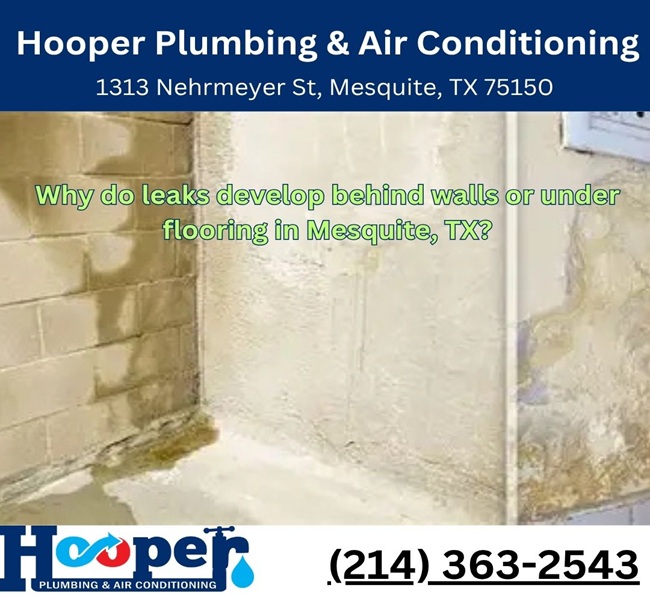
Leaks develop behind walls and under flooring in Mesquite because of a specific stack of local conditions working against your pipes at the same time. Expansive clay soil shifts with every wet and dry cycle and pulls on buried lines, older cast iron and copper plumbing corrodes from the inside out, hard water leaves mineral scale that weakens pipe walls, and tree roots press into joints they were never meant to reach. If you have noticed a stain that will not explain itself or a water bill that keeps creeping up, your concern is valid, and it matters more than most people realize. A leak you cannot see is the one that quietly damages framing, flooring, and foundations for weeks before it ever shows its face. That is why knowing what a qualified plumber watches for can make a real difference.

The Hidden Leak Problem Most Mesquite Property Owners Never See Coming
Most plumbing failures announce themselves. A faucet drips, a toilet runs, a fixture sputters. Concealed leaks behind walls and under floors do the opposite. They hide. By the time water shows up on a baseboard or a tile feels warm underfoot, the leak has often been active for a long stretch, soaking into materials that hold moisture and say nothing.
This is the part that catches homeowners, landlords, and property managers off guard. The volume of water involved can be small, sometimes only a steady seep, yet the cost of the damage grows every single day it goes unnoticed. A pinhole in a supply line behind drywall can release a surprising amount of water over a month, and none of it is visible until it has traveled far enough to surface somewhere unexpected.
Why Mesquite Homes Are Especially Prone to Concealed Leaks
Mesquite sits on ground and infrastructure that combine to make hidden leaks more common here than in many other parts of the country. Understanding the local causes is the first step toward catching problems early.
Expansive Clay Soil and Constant Ground Movement
The clay soil across Mesquite and the wider Dallas area swells when it absorbs water and shrinks when it dries out. That movement does not stop at the surface. It travels down to the pipes buried beneath slabs and yards, flexing them season after season. Over time this constant push and pull stresses joints and fittings until one gives way. Because the soil itself is doing the damage, the resulting leaks tend to start in places no one can see, often directly under the slab or where a line passes from the ground into the wall.
Aging Cast Iron and Copper in Older Properties
Many Mesquite properties built decades ago still rely on the cast iron and copper plumbing they were originally fitted with. Cast iron drain lines corrode and scale internally as they age, narrowing and eventually cracking. Older copper supply lines develop pinhole leaks as the metal thins. These materials were durable for their era, but they were never meant to last forever, and the failures they produce almost always begin inside walls or below floors where the original pipe was routed. Once one of these aging lines gives way, prompt Plumbing Repair keeps a small failure from turning into a major one.
Hard Water and Mineral Scaling Inside Supply Lines
North Texas water carries a heavy mineral load. As that water moves through supply lines year after year, calcium and other deposits build up on the inside of the pipe. This scaling does two things. It restricts flow, which raises internal pressure, and it creates rough patches that accelerate corrosion. Both effects shorten the life of a pipe and make a concealed rupture more likely, especially in the hidden runs that feed kitchens, bathrooms, and laundry connections.
Tree Root Intrusion in Buried Lines Under the Slab
Mature trees are common in established Mesquite neighborhoods, and their roots are relentless in their search for moisture. A sewer or drain line with even a hairline crack gives off exactly the dampness roots are looking for. Once a root finds a joint, it works its way in, expands, and forces the opening wider. The result is a slow leak feeding the very intrusion that is destroying the line, all of it happening underground or beneath the slab where it cannot be observed.
Where These Leaks Tend to Start and Spread
Concealed leaks are not random. They cluster in predictable parts of a property, which is useful to know when you are trying to interpret an early warning sign.
Behind Interior and Exterior Walls
Supply and drain lines run vertically and horizontally inside wall cavities to reach upper floors, fixtures, and outdoor faucets. When a pipe fails inside a wall, water tracks down the framing and insulation, often emerging several feet away from the actual source. This is why a damp spot in one room can be caused by a leak that originates in another.
Under Flooring and Within the Slab
Lines routed beneath flooring or cast directly into a concrete slab are among the hardest leaks to detect. Water from a line beneath the slab has nowhere to go but sideways or up, which can warp wood flooring, loosen tile, and saturate the subfloor long before any moisture reaches a surface you walk on. A leak in this position usually calls for specialized Slab Leak Repair to reach the line without disturbing the entire floor.
Warning Signs a Leak Is Already Active Behind Your Walls or Floors
Because these leaks stay out of sight, the early clues are indirect. Learning to read them can save a property owner from weeks of silent damage. The table below pairs common warning signs with the leak location or cause they most often point to.
| Warning Sign | Likely Leak Location or Cause |
|---|---|
| A warm patch on the floor with no nearby heat source | Hot water supply line leaking beneath the slab |
| Musty or earthy odor with no visible water | Concealed wall leak feeding hidden mold growth |
| Water usage climbing with no change in habits | Pressurized line leaking behind drywall or under flooring |
| Bubbling paint, discolored drywall, or soft baseboards | Pipe seeping inside the wall framing |
None of these signs guarantees a leak on its own, but any of them deserves attention. The faster a hidden leak is confirmed, the smaller the repair tends to be.
What Happens When a Concealed Leak Goes Unaddressed
The danger of a hidden leak is not only the water itself. It is everything that water touches on its way out of sight. Left alone, a concealed leak in a Mesquite property can lead to a chain of escalating problems.
- Mold and mildew: Constant moisture inside walls and under floors creates ideal conditions for mold, which can affect both the structure and the air quality indoors.
- Structural and subfloor damage: Saturated framing, swollen subflooring, and warped finish flooring weaken over time and grow far more expensive to repair than the original pipe.
- Added foundation stress: In an area already prone to shifting clay, a leak that keeps the soil under part of the slab wet can worsen the uneven movement that causes foundation trouble.
- Rising water consumption: A leak that runs continuously wastes water around the clock, which shows up as a steadily climbing bill.
- Tenant and occupancy issues: For landlords and property managers, an unresolved leak can damage finishes, disrupt tenants, and turn a minor service item into a major one.
How Concealed Leaks Are Located and Confirmed
Finding a leak you cannot see takes more than guesswork, and it does not have to mean tearing open every wall. Trained plumbers use a combination of methods to pinpoint a hidden leak with as little disruption as possible.
Noninvasive detection tools such as acoustic listening equipment and thermal imaging help locate moisture and the sound of escaping water inside walls and beneath floors. Pressure testing isolates a section of plumbing to confirm whether a line is holding or losing pressure. Moisture mapping traces how far water has traveled so the true source can be separated from the spot where the water finally surfaced. Together these techniques turn a vague symptom into a precise location, which means the repair can be targeted rather than exploratory. This combined approach is the heart of professional Water Leak Detection.
When Mesquite Property Owners Should Call a Professional
Some situations call for an immediate response, and others are better handled with a scheduled diagnostic visit. Knowing the difference helps you act at the right moment.
If you see active flooding, hear running water inside a wall, or notice a sudden and dramatic spike in usage, treat it as urgent and reach out right away. In those situations an Emergency Plumber can respond before the water spreads further. If the signs are subtler, such as a faint musty smell, a slowly rising bill, or a small recurring stain, a scheduled diagnostic appointment lets a professional confirm the cause before it grows. For landlords and property managers responsible for multiple units, building a relationship with a trusted local plumbing team is the most reliable way to catch these issues early across an entire portfolio rather than one emergency at a time.

Conclusion
Leaks form behind walls and under flooring in Mesquite because of the way the region’s clay soil, aging cast iron and copper lines, hard water, and tree roots all work against concealed plumbing at once. The trouble is rarely the water you can see. It is the slow, quiet damage to framing, flooring, and foundations that builds while the leak stays hidden. The good news is that these leaks follow patterns, they leave clues, and they can be found and fixed with the right tools before they become major repairs.
If you suspect a hidden leak in your home or rental property, the experienced team at Hooper Plumbing can help you confirm the cause and protect what matters most. To learn more or to schedule a diagnostic visit, reach out to Hooper Plumbing and explore the resources available for Mesquite and the greater Dallas area.